
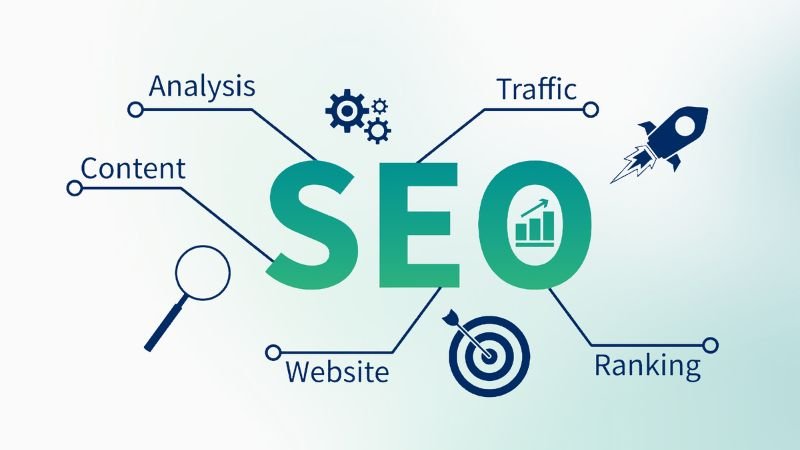
SEO in 2026: The Complete Guide for Businesses in the Middle East & Europe
Every business owner has heard the same advice by now: “you need SEO.” Few are told what that actually means in 2026, when Google’s AI Overviews answer questions before a user ever clicks a link, when Gulf consumers search in a mix of Arabic and English on their phones, and when European buyers expect a site that respects their privacy while still tracking what matters. Search engine optimization has not gotten simpler. It has gotten more specific to region, device, and intent — and that specificity is exactly where most companies lose ground to competitors who understood it first.
This guide breaks down what SEO looks like today for businesses trying to win customers across the Middle East and Europe, what it costs, how long results actually take, and how to tell a real SEO strategy from a recycled checklist.
Why SEO Matters More in 2026 Than It Did a Few Years Ago
Search is still where most buying journeys start, but the way people search has changed. Voice search, AI-generated answers, and “near me” mobile queries now sit alongside classic text searches. A business that ranks well isn’t just getting clicks — it’s showing up as the trusted answer inside Google’s AI Overview, inside a map pack, and inside the first three organic results that get roughly two-thirds of all clicks.
For companies in the Gulf and across Europe, this shift matters even more because competition online has caught up with competition offline. A well-run local company with a weak website is now routinely outranked by a newer competitor that simply understood technical SEO, local citations, and content structure. Being good at your business is no longer enough to be found for it.
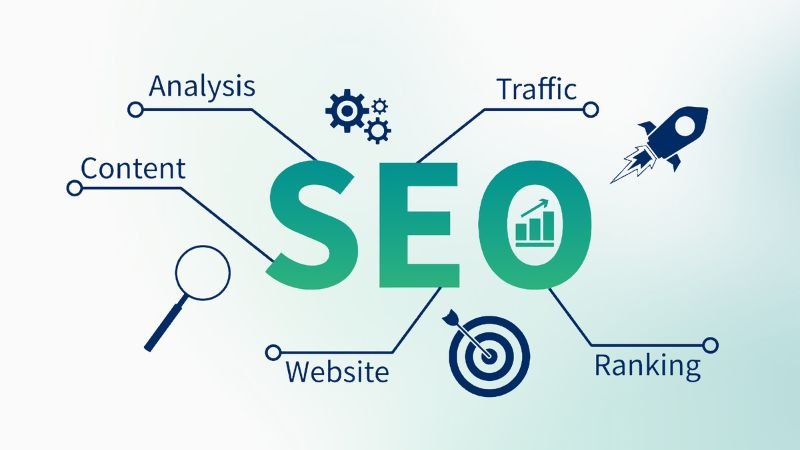
The Middle East SEO Landscape: Dubai, UAE, Saudi Arabia, Qatar
SEO in the Gulf region has its own rules, and agencies that only understand Western search behavior tend to underperform here.
Bilingual and Arabic-first content. A large share of high-intent searches in the UAE, Saudi Arabia, and Qatar happen in Arabic, or in a mix of Arabic and English within the same session. A site that only publishes in English is invisible to a meaningful portion of its own local market. Proper Arabic SEO isn’t a translated version of the English page — it requires separate keyword research, right-to-left formatting, and culturally accurate phrasing.
Mobile-first, map-first behavior. Gulf consumers search overwhelmingly on mobile, and a large share of commercial searches (“best clinic in Dubai,” “SEO agency near me,” “restaurant in Downtown Dubai”) trigger the Google Map Pack before organic results. A business without an optimized, verified Google Business Profile is effectively skipping the most visible real estate on the results page.
Rapid market growth, less saturated competition. Compared to mature Western markets, several verticals in the UAE and Saudi Arabia are still relatively under-optimized. That is a genuine opportunity: businesses that invest in proper technical and local SEO now can capture rankings that would take years to win in London or Berlin.
The European SEO Landscape: Multilingual, Privacy-First, Highly Competitive
Europe presents a different set of challenges, mostly driven by fragmentation and regulation.
Multilingual and multi-country structure. A business targeting France, Germany, Spain, and Italy isn’t running one SEO strategy — it’s running four, connected by correct hreflang tags, localized keyword research, and country-specific domains or subfolders. Getting this structure wrong is one of the most common reasons European sites cannibalize their own rankings across languages.
Privacy regulation shapes technical SEO. GDPR and cookie-consent requirements affect how analytics and tracking scripts load, which in turn affects page speed and Core Web Vitals — both direct ranking factors. SEO and compliance are no longer separate conversations in Europe; they have to be solved together.
Higher competition, higher content bar. European search markets, particularly in the UK, Germany, and the Netherlands, are mature and competitive. Ranking here typically requires stronger E-E-A-T signals (Experience, Expertise, Authoritativeness, Trustworthiness), better backlink profiles, and genuinely differentiated content — thin, generic blog posts rarely move the needle.
The 6 Pillars of a High-Performing SEO Strategy in 2026
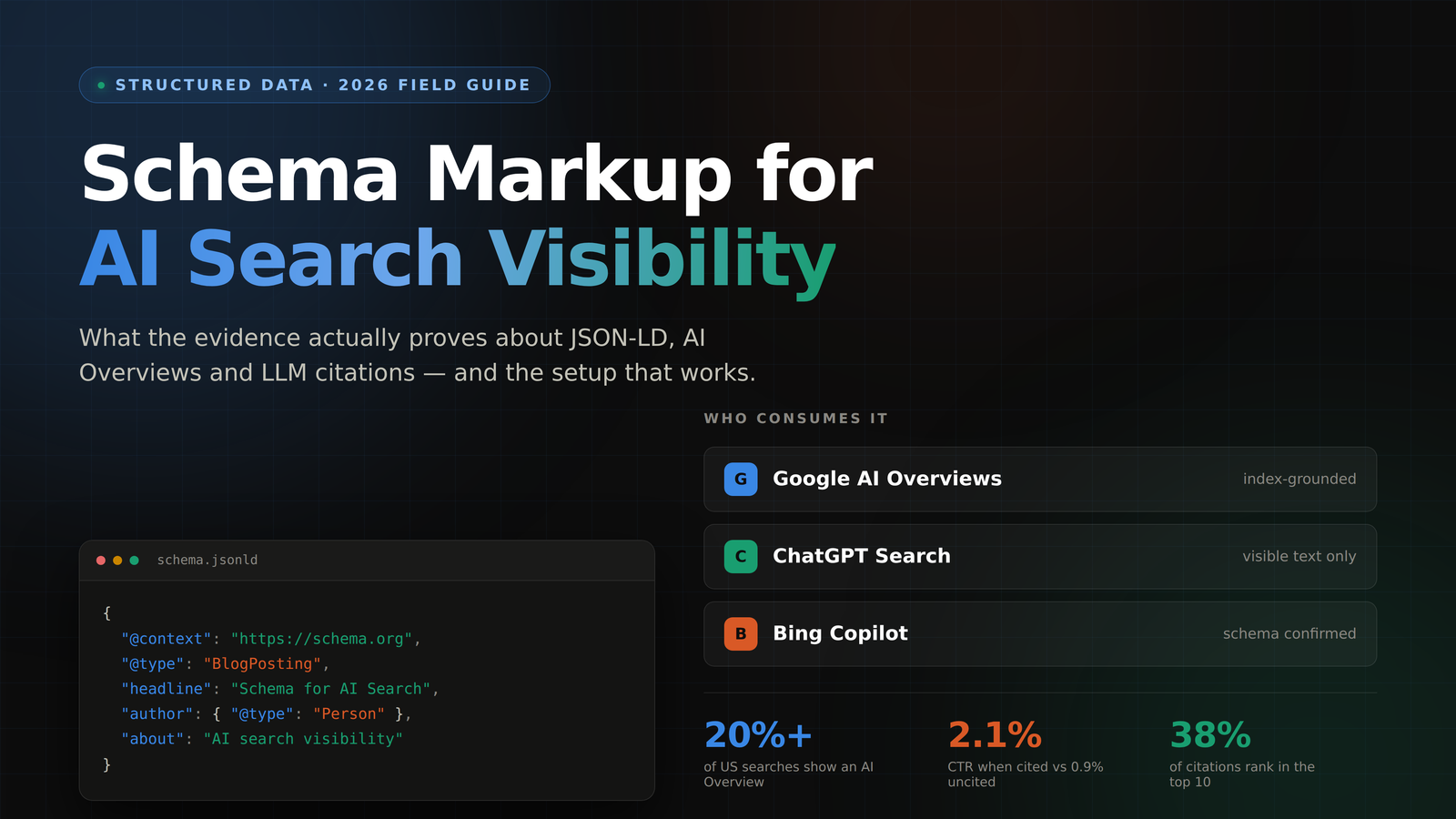
1. Technical SEO — crawlability, indexability, site speed, mobile usability, structured data (schema markup), and clean XML sitemaps. If Google can’t efficiently crawl and understand a site, nothing else matters.
2. On-page SEO & content quality — keyword-mapped pages, clear headings, intent-matched content, and demonstrable expertise (E-E-A-T). Content needs to answer the question completely, not just mention the keyword.
3. Local SEO — an optimized Google Business Profile, consistent NAP (Name, Address, Phone) citations, and location-specific landing pages for businesses serving Dubai, Riyadh, London, or Berlin specifically.
4. Off-page SEO & link building — earning backlinks from relevant, authoritative sites remains one of the strongest ranking signals, especially in competitive European markets.
5. AI-search optimization — structuring content so it can be cited inside Google’s AI Overviews and other AI-generated answers, using clear, well-organized, fact-based writing rather than fluff.
6. User experience & Core Web Vitals — fast load times, stable layouts, and mobile-friendly design, which affect both rankings and conversion rates once visitors arrive.
A strategy that only covers one or two of these pillars will show short bursts of progress and then stall. Sustainable ranking growth needs all six working together.
How Much Does SEO Cost, and How Long Does It Take?
Costs vary by market and competitiveness, but as a general guide:
• UAE and Gulf region: monthly SEO retainers commonly range from roughly AED 3,000–15,000+ depending on the scope (local SEO for a single location versus a full national or bilingual campaign).
• Europe: monthly retainers commonly range from roughly €800–5,000+, with higher-competition markets like the UK and Germany sitting at the upper end.
Timelines matter as much as price. Realistically:
• 0–3 months: technical fixes, on-page optimization, and content foundation are put in place. Indexing improves; rankings begin to move for lower-competition terms.
• 3–6 months: noticeable ranking improvement for target keywords, increased organic traffic, and stronger local visibility.
• 6–12 months: compounding results — established authority, higher-value keyword rankings, and measurable lead or revenue growth.
Any agency promising “page one in two weeks” for a competitive term is either misrepresenting the timeline or using tactics that risk a future Google penalty.
How to Choose the Right SEO Agency
A few practical checks separate agencies that deliver from agencies that simply bill:
• Ask for case studies with real ranking and traffic data, not just testimonials.
• Confirm they do region-specific keyword research — a UAE campaign and a UK campaign should never use the same keyword list.
• Make sure technical SEO audits are part of the process, not an afterthought.
• Check whether they can support bilingual or multilingual content if that matches your market.
• Be cautious of anyone guaranteeing specific rankings or “instant” first-page results — no one controls Google’s algorithm.
Frequently Asked Questions
How fast can new content actually get indexed by Google? There’s no way to force “instant” indexing, but the process can be made fast and reliable: submit an updated XML sitemap in Google Search Console, use the URL Inspection tool to request indexing for the specific page, link to the new page internally from already-indexed pages, and, for Bing, submit through the IndexNow protocol. Pages on a technically healthy, regularly updated site with strong internal linking are typically crawled and indexed within hours to a few days; new or low-authority sites can take longer.
Is SEO still worth it with AI search tools growing? Yes, AI Overviews and AI assistants still pull their answers primarily from well-structured, credible, indexed web content. Strong SEO is what gets a business cited as that source.
Should a business in the Middle East and Europe run one SEO strategy or separate ones? Separate strategies, connected by a shared brand and reporting structure. Language, search behavior, competition, and even Google’s local ranking factors differ enough between the Gulf and European markets that a single generic plan underperforms in both.
SEO in 2026 rewards businesses that treat it as an ongoing, technical, and regionally specific discipline — not a one-time task. Companies that get the fundamentals right, adapt to how people actually search in Dubai versus Berlin versus Paris, and stay ahead of how AI is changing search results are the ones capturing the traffic — and the customers — their competitors are still chasing.
HexisBot has spent 15+ years helping multinational clients across the Gulf and Europe build SEO strategies that actually convert, backed by bilingual (Arabic-English) and multilingual content capability and over 61 completed projects across healthcare, finance, and e-commerce. If your website isn’t showing up where your customers are searching, Please send us Email to see what’s realistically achievable for your market.
Website: Hexisbot.com
Whatsapp: +8615610511218



Leave a Comment
Share your thoughts. No account needed — just your name, email, and comment.
Comments (0)